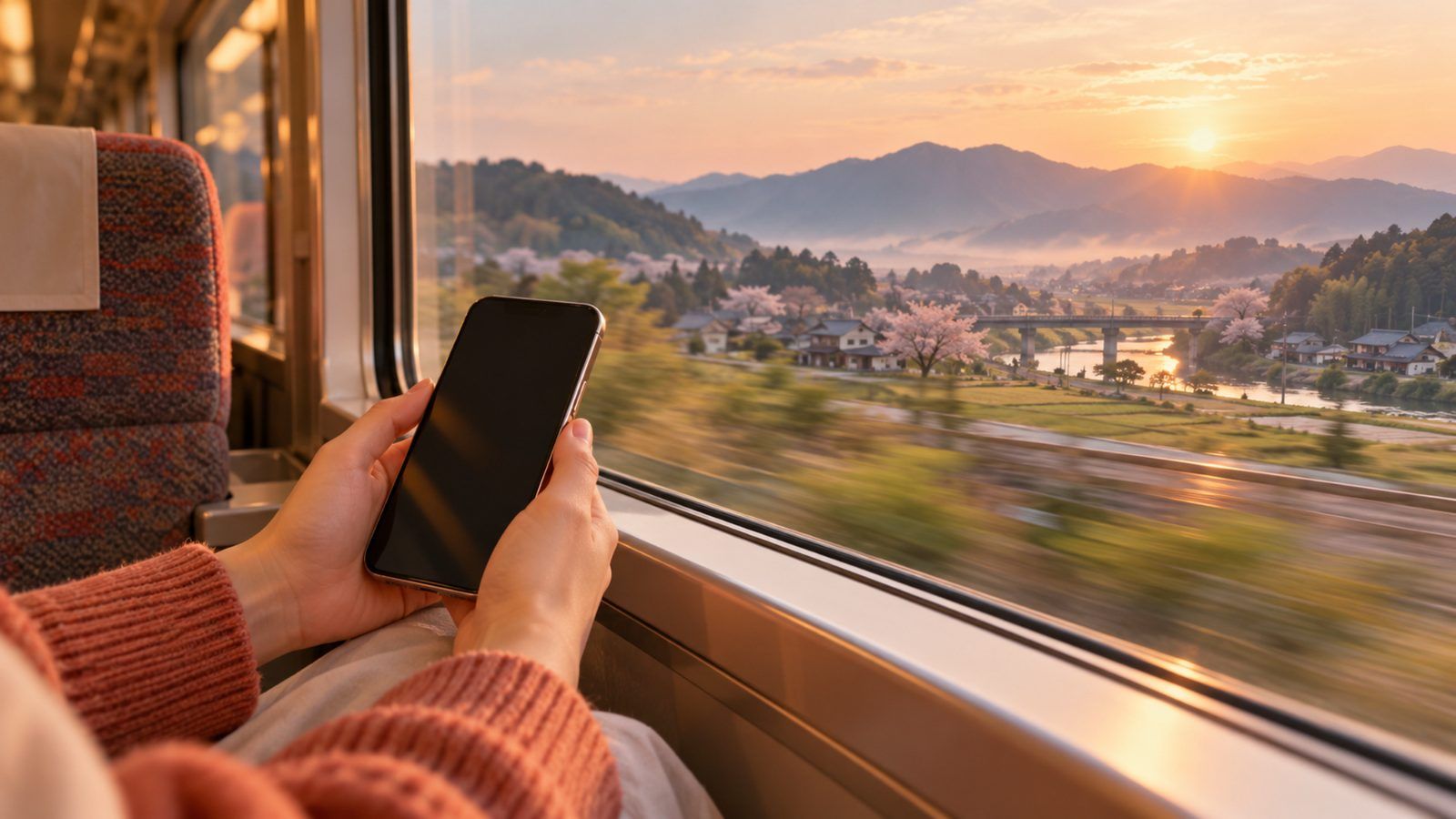
Japan is one of the easiest countries in the world to be online in — and one of the most frustrating if your roaming plan throttles you at the first konbini. Here is what actually matters.
Which network you get
Roambee connects to partner networks NTT Docomo and SoftBank, with 5G in major cities and 4G along the Shinkansen lines. Rural Hokkaido and the Alps are on 4G; expect gaps in deep valleys, like anywhere.
How much data you need
Google Maps with transit, the Google Translate camera and messaging use around 300–400 MB a day. Add Instagram stories and you are at 700 MB. For a 10-day trip the 5 GB plan (€13.90) fits light users; if you post or video-call every day, take 10 GB (€22.90).
Before you fly
Install the eSIM at home over Wi-Fi. Download offline Google Maps for Tokyo and Kyoto. Add Suica to your phone wallet before you land — it needs data the first time. Leave the Roambee line off until you arrive.
When you land
Turn on the Roambee line, enable Data Roaming for that line only, and keep your home SIM on for calls. At Narita or Haneda the connection usually takes under a minute.
Tethering and tips
Hotspot is included — handy for a laptop on the train. Free Wi-Fi is sparse outside hotels, so do not plan around it. A pocket Wi-Fi rental for the same trip usually costs more than a 10 GB eSIM.